Wednesday, 11 December 2019

Winter Washout


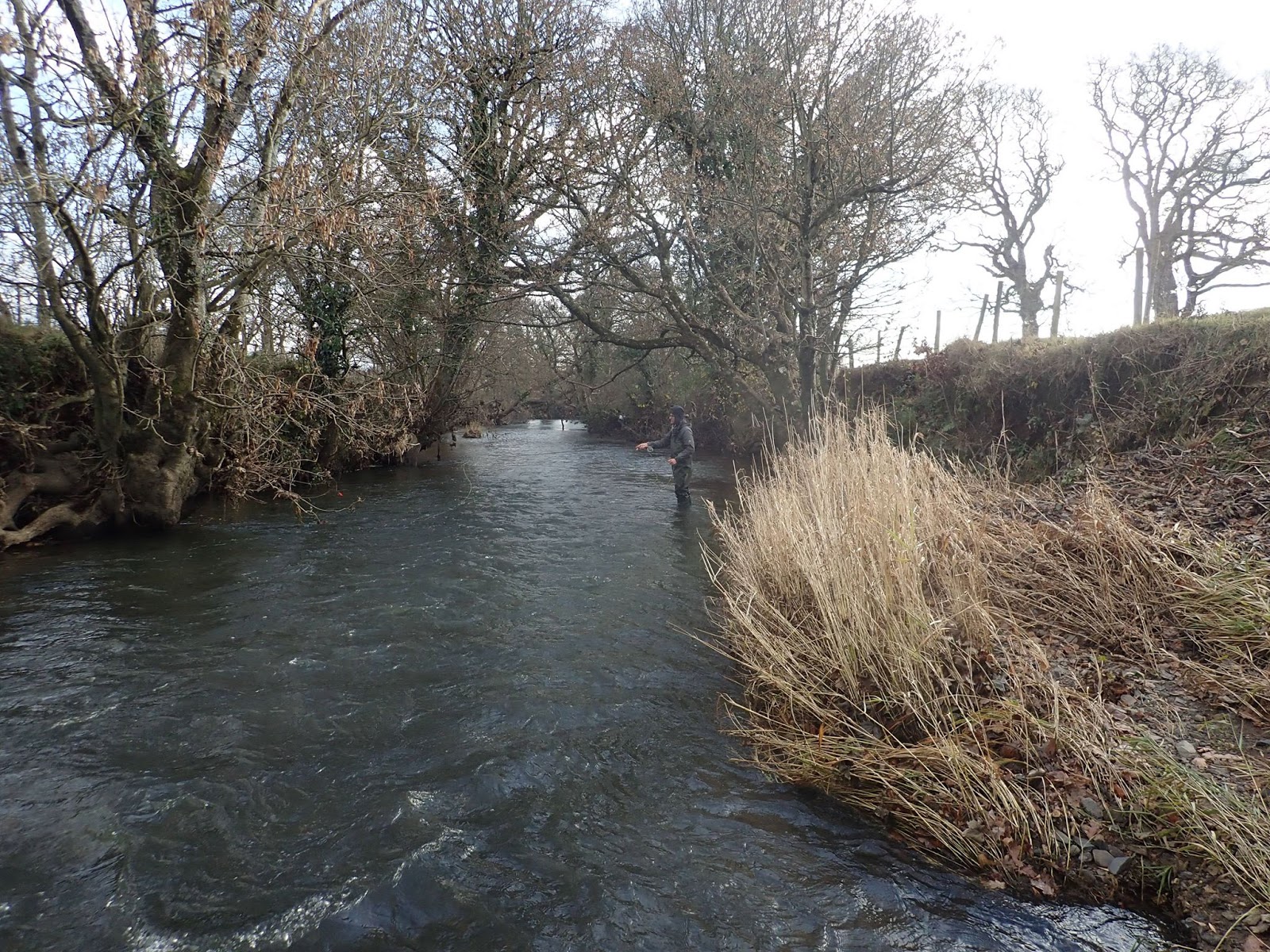
They say that we Brits like to talk about the weather and, if we were to eliminate utterances of despair at the two political 'B' words of our time, the chorus of the last month might read, 'Has the sun forever disappeared, when will it ever be dry?'. Having now moved to Exeter, commencing a PhD within trout population genetics, I had been hopeful for the many opportunities to explore the local provision of winter grayling within Exmoor's wild tributaries of the Exe and the larger pike and perch of the slower-flowing lowland drains and canals. Heading up to the Exe Valley fishery to sample a well-known stretch of the Exe for some autumn grayling during early October gave the first taste of the season to come: fast, dangerous, turbid water. No chance of presenting even the heaviest tungsten nymphs, the mere thought of wading suicidal. Not content to waste the 4 hour journey that my Dad had made there, consolation was found in some most-obliging Wimbleball rainbows. 


A daily habit, bordering obsession, has been found in checking the river flow monitoring graphs online, the hope of steadily falling levels throughout the week checked as a fresh spate consistently hit our rivers just in time for the weekend. Desperate, both Stuart and I ply fellow anglers in the local area for any recent successful days out. The repeated theme resonated; few had tried fishing, fewer yet had been catching. Not content to simply call winter the season of sitting behind the fly tying vice in the lazy comfort of the stale indoors, we managed to come across some welcome late-season bass. Hopes lifted, I bid Stuart farewell for a while with a small box of flies and odds-and-ends of tackle, my token participation in his seeking of Tasmanian trout. 


The last week of November saw a welcome dry spell, though with many such forecasts having been cruelly replaced by inevitable low-pressure systems as plans were made, hope was kept modest at best. As the days passed, small peaks were read on the flow gauge, as overnight downpours toyed with certainty. But doubt soon gave way on Friday night, as confirmation was given by a friend living next to the Barle. Though flows were still relatively high, the water was at least running clear. Double leggings, flask of tea, an assortment of heavily weighted flies tied the night before and many spare jumpers in case of unplanned dips into the icy water; the car was soon packed and trundling up the Exe valley way. The Dulverton Angling Association holds water on both the main Exe, and its tributaries the Haddeo and Barle, all for a very stipend-funded-student-friendly price of £35 per year, and upon local advice, tempered with the telling words of ‘it’s just nice to be on the water this time of year’, I parked up by the bank of the humble Haddeo. 


Despite the dry forecast, some unexpected shower fell through the trees, clinking loudly upon the roof and windows of my old Skoda. Looking out across the field, a neat line of Rangerovers parked as if in a show room, a grotesque picture of country lifestyle gluttony if I ever did see one, molesting the local environment they pose as stewards of. High in the air, driven pheasants fly clumsily, a few spiralling to the ground in mortal submission. Fat men, sugar-coated in tweed, nod approvingly at the killing. Throughout the year these riverside valleys have been transformed, stuffed thick with a monoculture of non-native pheasants, spoiling the land with a glut of pellet feed, natural ecology pecked thin, polluting the river, all for this day. What an honour to be there and witness the waste.

Holding my thermos of tea inside the car, dodging lead shot, I squirm eagerly into my waders. As if on cue, the guns stop and the opportunity is gladly taken to slink out towards the river. I’ve heard all the rage about Euro-style nymphing and had felt the absence of such a presentation during some sessions over the end of the season, to be able to present nymphs through deep pools and yet stay in contact in such a way that an indicator perhaps might not allow. Eager to expand my horizons, I’ve got my hands on a two-toned French leader from Barbless Flies, and soon find myself looping this on and tying a 5 foot section of tippet to the end. The action, bereft of the assistance of the weight of a fly line is jilted and unpredictable to start, but the systematic pattern is soon ingrained: flick, drift and track stop the rod behind to allow the nymphs to rise and flick against the weight of the water. 


What a sullen scene. I'd certainly not be picking those tail feathers for flies. 


When the first bite came, line halting at the tail of a deep run, I’m not sure who was more surprised. Unfortunately the culprit was soon revealed to be a male brown trout, a fine fellow too of 10 inches, but very much in the season of spawning. Barbless hook slipped out, a few words of encouragement were given to think less of his belly and more of passing his genes on, and he was back to the depths of the pool. Under the imposition of a road bridge, on dutiful cast was given to the dark water beneath so as to cover all the water. A silver flash, a few moments of struggle, and all over. The mind dances tantalisingly as to whether I have just danced with the lady of the stream, or just another out-of-season brown. Either way I’d been jilted. 


Meeting the road bridge, a change of tact was decided, walking the length downstream to look at the beat of the main Exe. Though the water was clear, it was apparent that the waist depth and pacey water might easily carry me all the way back to Exeter, shivering, if caution was not employed. Venturing out nervously, reassurance was found in the crunch of fine gravels and knee depth water, nothing too far out, peeking towards the deeper run on the far bank. Another footstep, however, plunged me down up to my upper thigh in the icy water, stumbling to keep balance. ‘Maintain control’ passed through the mind, as I found myself to be skating on devilishly slippery bedrock. Directly downstream, maybe 20 metres away, a deep churning pool threatened to snatch this foolish angler for his insolent lack of respect. One foot to the right, quickly followed by another, foot jammed beneath a boulder, torqueing against this for security. Wide stride, crunch, and safely back on fine gravels. Enough of that, time for lunch and a cup of tea. 


You're not a grayling! Hoped that the pink bling might bring out the lady. 


There’s something nice about being here by yourself, mind taken to consider the subtleties of conversation or trying to keep others happy. I don’t think that it is selfishness that owns such moments, but the ability to let the rolling water, muted autumn colours and individual birdsong permeate your consciousness; no barriers or distractions. Tea finished. Not finding any more promising and safely wadeable water on the main Exe, a march was to be taken back to the Haddeo, where the day had begun, but fishing further up along the next beat. Instantly I felt more at home, the river scarcely wider than a rod in many places, and mostly shin deep, akin to the intimate waters of West Cornwall. A change was made from the duo of heavy shrimps, the more gentle flow accommodating a single red-peeping caddis. Flicking this into a textbook back eddy, line held high above the fast flow in between, an instant bite is brought, and the value on this nymphing malarkey seems to be made evident.


An hour or so continues in the same vein, chastising all too eager browns from almost every likely looking deep run for grayling. Light dying, I was contented to call it quits besides a deep pool, a half-rotten corpse of a pheasant marring the scene slightly. I’d failed to locate the elusive lady this time, but no matter, it really had been a breath of fresh air to be trying something new. Grayling 1, Dan 0. I’ll be back.

Nice to finally get some patterns out of the vice and into the drink!

Sunday, 20 October 2019

Urban Mischief


Lowman

‘Go on then, what happened last night?’ Mia asked as we sped up the Exe Valley way, the commute of this summer’s unorthodox electrofishing ‘working’ life.


‘Man alive, I lost one of those “oh shit fish”, you know the kind that you might only come across once or twice a year. I’m still shaking about it. You’d never guess where I was though’.


It was a late August Wednesday afternoon, the aroma of my Skoda Roomster now thick with the evidence of a summer living as an ecology graduate come vagabond, scraping a living from an unpaid internship by living in this all too cramped and basic camper. Dutifully, I’d made the rounds to landowners in the morning to ask permission to carry out fry surveys on their sections of the river Exe the following day, whilst Mia was doing likewise for gravel cleaning works on the river Culm. If gravel cleaning leaves question marks in your head then don’t fret, it did for me until recently. As it turns out, our rivers suffer such horrendous amounts of soil runoff from the surrounding land, accelerated by poor land management (i.e. cattle farming, growth of biomass crops with no winter cover crop, loss of woodland, ect) that industrial machinery is required to blast away the choking sediment from the river system. Unseen to most of us, something to consider over your next milky brew. Aside from such concerns, my duties were completed for the day with the afternoon laid open for me to occupy myself. To your average nine-to-five kinda guy, such an opportunity might be relished, splashing the rich wealth of hard toil towards a ticket on a pleasant and well managed westcountry fishery. I however found myself as not that kind of guy, lacking the wealth to boot. Free, untamed, dirty water was the order of the day and I had something in mind.


In the centre of Devon’s very own rough and ready Tiverton (my opinion of the town may be marred by the experience of working with particularly uncooperative students from the area), the river Lowman feeds down into there mighty mid-Exe. I’d heard tell of good grayling fishing to be had just upstream of this confluence in the Exe and seen grayling fry in the lower survey site of the Lowman myself, so a foray after the elegant lady of the stream was devised- though perhaps less lady and more streetwise gal in this less than pristine home patch. Beside a gated facility at the back end of an industrial estate, I rushed my waders on as quickly as possible, like an additional round in a triathlon change over, hoping to avoid drawing too much attention before slinking below into the neglected stream.


Lowering in, a quick rise immediately strikes optimism as I miss pricking the unseen offender. Optimistic, I carry on, making short sideways casts with the playful seven foot rod under the hanging grasp of low sycamore branches. The high artificially built-up banks and dense riparian cover leave me squinting for the dry of my duo rig, any takes to the pink nymph irrelevant with my visual margin of error so great. The leader is brought close, a yarn indicator attached in place of the dry, and the nymph left to trot back down the flow again. A snatch here, a tap of connection, and the nymph pings back towards me. How frustrating, one fish missed and one hardly connected. Making my way past a fallen tree I inspect its flowing foliage, a collection of plastic bags trapped in the branches. I can see a deep hole beneath, surely housing a good fish or two, but the dense branches cannot be penetrated by even the most optimistic casting. At the tail of a steep riffle, a large boulder leaves a lee, a textbook relief from the flow for one of the river’s inhabitants. Making my way up with short casts, by my fifth the very head of this water is covered and the indicator goes dashing forwards. Aha! Connection! A bright silver gleam, as the surprised culprit holds itself against the current in a sail-like fashion, revealing her identity as my very target of a (abeit small) grayling. But just again, the line goes limp and the yarn drifts sadly back towards me. Damn. Inspecting the nymph I see nothing wrong; a size 14 barbless pink shrimp with gold bead flickering dully through the limited available light, hook unbent, sharp and well attached to the 3lb tippet. A rancid, rotting pigeon glared mockingly at me, eye now festered from its socket.


Making my way upstream, the engineering on this particular stretch of water begins to become more apparent, with the general riffle-pool-glide sequence broken by long stretches of impounded water, feeding down into steep drops of plunge pools, concrete bound first just in sides and then in substrate. Fishing becomes less efficient; in a bid to continue exploring the length of the river, I find myself walking through long stretches of water too slow to hope for the fish to be undisturbed, before traversing along banks of stacked wire cages of granite boulders, presumably placed in fear of bank subsistence. No bother I thought, it’s all part of the game of exploring new water, the territory will soon become easier, so I thought. Besides, the steep banks were now fenced beyond the thick brambles, my poor waders really didn’t need any more abuse.


Traversing the left hand bank, I found myself able to perch along the partly-submerged branch of an old, thick trunked willow, the bottom below not visible through the turbid water, and I hoped not beyond the limit of my waders, should I have had to (unwillingly) test the bottom. From this point it was possible to cast my nymph forwards into the head of the pool, with great churning flow soon slowing to near stagnant by my position 5 meters behind. Stripping some line from my spool, I worked the weight of the line drifting downstream into an upstream lob, so avoiding the litter of many branches lying between. I can’t see such an unorthodox cast being taught by certified fishing guides anytime soon, but in this far from manicured stretch of water, a sense of ‘imagination’ can often prove valuable. Sorry purists. My uncouth deed was soon met though, as the indicator hesitated, lifting an instinctive flick to the wrist. The three weight bent through to the butt, some unknown force pulsating in the deep water of the plunge pool. Instant adrenaline surged through the blood, a thousand thoughts flying in the periphery of my mind as sole focus was on keeping the rod tip high, maintaining pressure but not pulling too hard in excitement. Elated, water parts and splashes this way and that as a bar of gold goes airbourne. All periphery now melts away. I now know that this is a good fish. I never much want to think of the size of a fish till it’s landed, the grief of too many fish lost has cut me over what was never really mine and the mind drifts greedily to exaggerate. This time though I can see with my own eyes, a really good fish for the westcountry, a prime native brown trout eeking out a lazy existence from the polluted water. And then I feel sick, the line is slack, gone. My hands are shaking, I can’t yet bring myself to cast again. Taking ten minutes, I sit mulling over the events. Losing fish had been frustrating before, and I’m loathe to put a size on the fish, but it was at least as good as any I’ve ever had from southwest England. Shaking subsided, I cast again, but this pool has given its lot. The excitement was not quite over however.


Traversing large boulders I make my way around the deep waters of the pool. The boulders are slimy, covered in grime and dank mosses. A few desperate moves are made to scratch myself through hanging brambles, cruel thorns plucking a few bright crimson droplets of blood. Now above the deep churning water, I find myself in something of a pickle. The wilfully mischievous game of climbing had perhaps prepared me for this moment, a VDiff traverse lunge on sloping holds and awkwardly angled feet. For those that don’t speak in the language of crusty guidebook writers of the trad climbing fraternity, this constitutes moves that would be within hand but somewhat exciting without a rope in fair conditions and a half decent pair of rubber climbing shoes. I, however, was pushing on these awkward nubbins with clumsy size 12 wading boots, cursing through my clenched teeth around the rod the slimy holds. Mischief indeed, but soon passing to safety.


Perhaps I would find a way to extract myself from the now awkwardly modified river, have a cup of tea and laugh it all over. But steep concrete walls, unclimbable even if I had the appropriate attire, mocked this cry of defeat. Timidly I continue upwards, horrified by what laid before me. The substrate of the river had here been entirely replaced by a smooth concrete bottom, uniform in its lifelessness, flow, width and depth. At the head stood a plunge pool with a drop height of a few feet, the concrete abyss stretching at least 6 feet deep and along from the shallow concrete I’d been strolling along. Thought of nymphing through this hole was soon replaced by the dread of knowing that I’d have to pass through. Bother. A construction worker takes another break, waving a cigarette in one hand, the other pointing at me.


‘What dya think you’re doing there, no fish eh?’ he jests.


‘Well I’ve seen a good few, you never know’ I mustered.


Doubt fluttered in my stomach, but I couldn’t bear to admit my predicament, fearing greater scrutiny might be put on whether I could be fishing there, and I’m never in the mood for such trite nonsense. Walking closer, I inspected the smooth concrete walls, hopeful for some weakness. Dread was countered with mild amusement, I found myself to be breaking down the dull stereotype that a certain Mr Hartley has burdened fly fishing with, this was the real stuff. A thin metal board trailed the side of the concrete wall, I suppose a ‘compensatory’ measure put in to allow the passage of aquatic mammals, having all the hallmarks of the minimum cost applied to tick the ‘ecofriendly’ legal requirements. It’s pressed hard against the wall, as I get down to my knees I can’t find space to jam my fingers in, palming hopefully against the side of the metal instead. My left leg trails off of the side, the board a foot or less wide, not quite secure for my whole girth. Grinning through clenched teeth around the rod, I find myself once again too far to retreat, swirling water below and the lip of the next concrete paved riverbed tantalisingly close. Urban fishing at its best I told myself, putting aside the doubt that informed me that I was, in fact, a stubborn fool.


Another pool was passed in like manner, but all soon calmed down as loud construction sites mellowed to quiet urban gardens. Frustrated with the manner of the pink shrimp, unexplainably losing me every hopeful bite, I switched to a tiny #18 black headed pheasant tailed nymph with an offset barbless hook point. Flicking this into the head of a fast shallow run quickly produced a take, and with much insisting to myself that I wouldn’t dare lose this one, nine inches of my first Lowman trout was soon sat in the net. Chuckling away to myself, note was made to return, passing confused looking teenagers on my stomp back through to the car.                                                                                                                                               

Sunday, 11 August 2019

Coastal California!

There are three circumstances under which you can sea fish in California:

1. Buy a license (quite expensive for non residents)
2. Fish off a public pier/jetty (no license required)
3. Fish on one of two "free fishing" days/year

(I guess there's also technically a 4th option, to fish without a license- but i'd not risk it as they take fisheries enforcement a whole lot more seriously than in the UK. )

As I was on a family holiday with fishing very much on the back bench, I decided not to spend 130$ on a licence, instead opting for options 2 and 3. 

A few days south from San Francisco we came across a large pier. I thought it was quite an odd location for a pier, it looked rather out of place. Picture a large sandy, shallow bay fringed with eucalyptus and cypress trees, a few small farm buildings and an enormous wooden pier about 250 m long. It really didn't fit the scene.

san simeon pier.JPG

Considering it was midday, about 30 Celsius and a 25 mph cross-shore wind I didn't really think it would be worth fishing. We'd only really stopped to have lunch as there were plenty of picnic tables and a good view.

I took a walk along the pier regardless and saw two fishermen packing up, they had caught two small pilchards on sabikis but nothing else. The water couldn't have been more than about 10 foot deep even at the end of the pier, so I figured any fish would be in deeper water till the evening. Staring into the slightly murky water I noticed a dark patch, about 20x10m. It looked just like a patch of reef , but this 'patch' moved. Only very slightly, but over 5 minutes it was now about 20m to the left. Baitfish? Or a huge raft of weed? I ran back to the car and grabbed a travel rod to confirm. Casting a metal lure against the stiff wind into the 'patch' soon resulted in catching a small horse mackerel. More fishermen had started setting up- perhaps 10 were now positioned along the pier, all casting downwind. Despite there being a very obvious mass of bait, everyone else was casting out onto barren sand. 

I could feel my metal bump into the baitfish, but nothing larger was having a go. I decided to change to a delalande swat shad and 15g jighead and bump it along the bottom beneath the bait. This turned out to be a great idea, as about 3 casts later I had a take! A big weight pulled back and stripped a fair bit of line from my reel. What had I hooked? It felt big, and also quite like a flatfish. I'd done a little research into potential target species, but was under the impression that it wouldn't be easy to catch a halibut from the shore with no prior knowledge. Sure enough, a California halibut soon surfaced!!

One problem - I didn't have a drop net. Nor did anyone else. This meant I had to walk the fish 240m back to shore, past angled barnacle encrusted pier pilings. It was a heart-in-mouth 10 minutes. I nearly lost the fish multiple times as it made several dives for cover, but by some miracle I landed the fish! Just under 10Lb of prime halibut, well over minimum size. As it's a well managed fishery I decided to keep the fish, which we enjoyed over the next couple of days. Possibly the best fish I've ever eaten?

IMG_3006.JPG

I didn't have a chance to fish for a couple weeks, until a "free" fishing day came round. To cut a long story short, we walked about 6km to a remote surf beach to try for striped bass. You're probably thinking I'm deluded, people only catch striped bass in the Atlantic, right? Surprisingly, a couple hundred juvenile bass were transported from the East coast to San Francisco bay in the late 1800's and a healthy population soon established. 

The spot was superb, the wind however really wasn't. 30mph cross-shore again... 10ft swell made things interesting too. We fished metals as nothing else could even make it to the shore dump! I blanked over the 5 hrs but my dad managed to catch a beautiful 60cm+ bass and a tiny weever fish. Actually, I did foul hook a crab..!

IMG_3180.JPG

I was quite impressed with the quality of California's fishing and imagine it's well worth going back to explore the fishing in more depth. There's also stacks of other marine life to keep you interested if the fish aren't biting- saw orcas, elephant seals, sea otters etc..!

IMG_3001.JPGIMG_2979.JPGIMG_2986.JPG

Monday, 5 August 2019

When it 'clicks'.

Cheap baked beans are mopped up with crisp hash browns, a large mug of tea washing it down. Thunderstorms have pushed us from slate quarry climbing into the refuge of Llanberis' cult favourite café, Pete's eats. Dawdling in procrastination, a message pings up on my phone. Nick Hart, he's wished us well to give his beat of the Exe a crack later in the week but warns that things won't be easy. Something to be grateful to the rain for at least; it's much needed to bring the water up from the glassy bones that it has been lying in, the fish vulnerable and all too easily spooked.

A short dip in the Dyfi regains some vigour to limbs as we make the pilgrimage south, catching up with Ben on the way- a man of impeccable character but living far too distantly. Without such a welcome distraction, M4 traffic may have later driven me to utter madness. 'Plooosh', a large ring cascades from the pool below the bridge, a solid bar of silver sea trout glimpsed to be responsible. A most welcome sight after such heartache over the struggling migration of salmon on the Exe, a much discussed issue with Stuart and now recounted to Ben.

After many hours, hobnobs and cups of stale instant coffee, we've arrived for our annual pilgrimage at the Exe Valley fishery, dipping into our waders and into the clear river water. Many hours have been spent in this very river over the last month, working with the Westcountry Rivers Trust on their annual fry electrofishing surveys. But today is about fly fishing, no distractions. Loading up my waders for the day, camera, flies, car key, phone... I hesitate. This small device could be a great tool for emergencies and make sure that we stay in touch with what the others are up to in our absence. And yet it is a sucking distraction, available to the whims of everyone and anyone who might want to drag one from the bliss of the river and into the tangled maze of everyday goings on. Anxiety wins out, the phone is packed.

The mist hangs low and, quite pleasantly, there's not a breath of wind as we begin making our first tentative casts. A pool is shared and we both get the day rolling with some naughty escapee rainbows, colours amplified and vivid from the rich taste of wild freedom. A buzz from within my waders. Optimistic and glad, I check to see what the outside world has to say. Just like that, I'm drawn into the void of care as a message knocks me off guard, not knowing how this has come or hoping to know how to respond. The phone weighs tenfold as I trudge now upstream.


A large grayling is spotted just above the riffle I'm standing in, and I fumble to tie the New Zealand dropper shorter below my large buoyant sedge. Dad watches on eagerly, a couple of short false casts to mobilise the package and the three weight line lands just a couple of feet too far, spooking the grayling and blowing my chances. The next few hours pass much the same, few hatches and fewer rises as drizzle kicks in and only the occasional fish on the nymph. Lunch is a despirited affair of hobnobs and three bananas, considering how to make more of the afternoon.

The day passes much the same. 4pm comes around and I'm unpicking the umpteenth knot from my leader, symptomatic of the cares gripping my hands and causing an unsightly tailing loop. Just upstream in a favourite run, a gentle sip with a small bubble is left behind. I don't know what it is, but looking at the grey form responsible belies the character of a beautiful grayling, it just has that spirit about it. Once again, I cover the fish with a simple tungsten nymph, thrice, each time refused.

The grayling keeps rising. Further casts are futile, he'd have taken my sunken offering by now if he had the mind. Care now slips away as I study closely the dancing form in the water. Sat below a bush, it appears to be sipping gently away at tiny falling aphids, hence the ignorance of the large sedge on my duo. A size 18 F fly, a simple yet fittingly delicate presentation, is tied onto some 7X tippet. The first two casts are a foot too far left, the focused fish ignores them and continues to sip at tiny offerings. The third cast is just right; two feet ahead and a few inches to the right. Breath is held, the fly drifts gently along the glide towards its target. Small and hardly perceivable, all intent is fixed in these short seconds on it's meandering dance downstream. The grayling fixes its gaze, clocked on the target. With a lazy lift of the head, the current draws the fish upwards, as it flicks to the right with a gentle sip. I can hardly believe it, but an automatic flick of the wrist sets the hook.

In this moment the world just seems to make sense. A spirited and joyful fight sees an 11'' grayling landed, but truthfully if the hook popped before the net I'd be no worse off. I'd glimpsed, understood and connected with something so beautiful and natural in the river, a validation of my place here. Next time the phone will stay in the car, nothing is really that urgent anyway.


Wednesday, 20 February 2019

Freshwater Foray - 20/11/18

Nearly three weeks had passed since I had a productive sea fishing trip, and a recent walk along the coast path confirmed what the forecast had predicted.

I was secretly hoping the forecast was exaggerating, but sadly it was not. Somewhere in the region of 5-8f waves were battering the South coast of Cornwall, and the easterly gale expected to remain with us for the rest of the week. The sea was a churning mess of flotsam and ripped up kelp, with a dark brown tinge to the waves. Even if it were possible to cast a lure out into the chaos, the chances of a fish intercepting it before becoming caked in weed and debris seemed almost impossible.

In an attempt to fight the early onset of cabin fever, Dan and I had been discussing other options for fishing, to make the most of the conditions at hand. Sea fishing was out of the question, but how about the rivers and lakes? Dan had mentioned we could try for a grayling earlier in the autumn, something I was very keen to do as I hadn’t yet caught one, but we never got round to trying.

Sunday evening my phone buzzed and I remember glancing over at the dimly lit screen. A one word text message from Dan had been received, reading “Grayling?” I didn’t have to think twice; although I had a busy schedule for Tuesday, I rearranged to let fishing take priority. The allure of trying new techniques for an unfamiliar species was just what my fishing-deprived self needed.

Setting my alarm on Monday evening was followed by a night of light sleep, akin to my childhood fishing trips. I used to be so excited for the following morning that I would always struggle to get any meaningful sleep. It was a bitterly cold morning, frost glistened on the windscreens of cars along the street, but thankfully the previous day’s rain had passed and we were blessed with clear winter skies. As Dan pulled up outside my house, I’m sure he must have chuckled to himself, as I clumsily made my way to the car with my arms piled high with waders and whole wardrobe’s worth of warm clothes.

The drive up’s discussion mostly revolved around fly fishing, as I tried to pick Dan’s brain to glean any tips for the upcoming session. As grayling haven’t made it past the Tamar system, we journeyed towards the Devon border to give ourselves a chance of catching one, giving us plenty of time to catch up and exchange stories. I always find the anticipation to be higher on longer trips, although local trips are enjoyable, they lack some of the uncertainty and mystery which surrounds a dedicated fishing mission.

Upon arrival at the river, we rushed out the car to peer over a bridge and gaze into the waters. We were greeted with a pleasant sight, clear waters and not too much flow. We had the choice of the main river and a tributary, as we were on a beat either side of a confluence. Before kitting up in waders, we briskly scouted out the two rivers and Dan gave me some bankside casting lessons with a fly rod, which was challenging given we had 25knot winds.

Having navigated a few fences and a steep bank, we found ourselves immersed in the river, casting small pink nymphs upstream and watching our indicators bob along in the flow. It took a while to find a rhythm, where I could cast against the wind, control the line, and ensure the fly would drift naturally. However, in about ten minutes I felt like I had a decent grasp of the technique and moved on upstream following Dan’s lead. As we had had a very cold spell the previous week, we wondered if the fish had started to shoal up in deeper water, as opposed to being spaced out evenly as they are in the warmer months. The water in the main river was far more coloured than the tributary, and having no previous knowledge of the water meant it was sometimes challenging to know how deep the water was, and where the fish might be holding. After two hours of fruitless fishing, we decided to head to the smaller tributary and see if we could fish more effectively there.


Once again we worked our way along the banks, trying our luck in each pool or riffle we came across, but worryingly we had seen no sign of fish, not even any spooked out of season trout. It was particularly disheartening to see Dan not catching, as I thought if he can’t then there’s little chance I’d be able to. The bitterly cold weather certainly didn’t add to the experience, and I was becoming increasingly aware of the decline in sensitivity in my fingers and toes. We carried on, working our way back up to the bridge and the car, only seeing a few minnows in the shallows. It was now lunchtime, and we decided to have a short break to warm our near frozen feet and fuel up on sandwiches.

Whilst eating, we looked over an article on West Country grayling fishing, reassuring us that our methods were appropriate. I decided to change the fly I was using to a similar pattern, just slightly bigger. As Dan worked on a new leader I headed off with renewed enthusiasm, but on no other than the first cast upstream of the bridge, did I hook a tree on the back cast. Having seemingly perfected the art of fly removal from overhanging branches for the previous 5 hours, I was disappointed to lose this one and had to tie on something else. Fine line and cold hands presents another challenge, but before too long I was back to casting.

About half an hour passed and by this point, in all honesty doubted that I’d catch a grayling. Casting an eye over to Dan and observing his much more refined technique was refreshing, and I was patiently waiting to hear him shout “fish on” so I could run over and land and photograph his fish. Sadly this didn’t happen, and I fabricated an almighty tangle of leader and fly line that could only be resolved by cutting back and starting again. Tying the leader was far more time consuming than it should have been, joining four lines of different breaking strains together was excruciatingly slow, with stiff, cold and wet fingers.

Eventually I was ready to fish again, and we moved on yet further upstream. As we rounded a corner, we were presented with a narrow portion of river running fast along the far bank, undercutting the adjacent sheep field. There was also an overhanging ash tree, and looked an ideal lie for a fish to hold in. Dan kindly offered the spot to me, and as he headed on upstream I made a few casts. It took several attempts to place the fly where I wanted it, but eventually was able to watch the indicator trot gently downstream close to the undercut bank.

Having already probably watched 500 bite-less drifts, I wasn’t really expecting this one to be any different, but to my total amazement something told me that a fish took the nymph. I don’t remember seeing anything happen, only that my reflexes tightened the line and set the hook, securing my first grayling to the line. I was in total disbelief that I had actually hooked one, and shouted to Dan to come over. In all the excitement, my lack of experience with a fly rod surfaced and I somehow let the fish slip off the hook before landing it. Despite not landing the fish, this was the confidence boost we needed, and we quickly set about with fully renewed enthusiasm.

I was unable to extract any more fish from that swim, but carried on upstream hoping to find some similar areas. An hour later, at a very promising looking spot, Dan manged to hook into something, however we soon realised it was a small trout and not the elusive grayling we were after.


I moved further upstream, and tried a couple of promising spots but saw no  signs of fish life. My bite indicator was also starting to sink, so I managed to incorporate a burdock seed-head into it to make it float again. Pleased with my improvisation, I settled on a slightly deeper pool on a bend in the river and managed to force another cast out with my frozen hands. I was pleased with the placement of my cast, and as my nymph drifted just above the stream bed it was intercepted and the bite indicator came to a sudden halt. I stuck fast and was into a fish, this time determined to land it. Thankfully it stayed hooked as Dan rushed over to scoop up my silver prize. 


Despite being only a small female, lacking the impressive dorsal fin grayling are renowned for, I was elated. The effort had paid off, and after a few pictures the fish was released. We carried on a little longer, but once the sun set, we were forced to head back down to the far south west. Today was one of those days that becomes ingrained in your angling memory, succeeding on an adventure into unfamiliar territory, chasing an unfamiliar fish, with an unfamiliar technique whist in the company of friends. 

Thursday, 13 December 2018

A lesson in urban trouting


'A polished car and a screaming siren, pneumatic drill and ripped up concrete...' , Paul Weller's musings of city lifestyle reflect perhaps my own cynicism of the concrete jungles that led me away from the stifling atmosphere of South East England. And yet here I find myself, striding through throngs of busied shoppers, dawdling café dwellers and self-assured businessmen. Perhaps it's paranoia that leads me to see their looks of distaste and surprise as I do my best to keep my head down and slide past. Perhaps it's the fact that I'm wearing full body waders and clutching a 7 foot 3 weight fly rod. 

Okay so I'll come clean, Truro isn't particularly urban by many peoples' standards, yet for one living in simple solitude with more fields than people for neighbors, is seems more than enough for me. But Truro is also home to a delightful pair of little known rivers, made all the better by their juxtaposed location, the Kenwyn and the Allen. After departing from an all too brief meeting with friends, we parted ways: they for London, I for trout. 

I'd just clambered down the wall of the park, stripped a few yards of line from the reel and trotted my go to dirty water nymph in front of my feet, when a finger length brownie kindly came to the hand. The sun was now warm on my back for the first time in several days, and I was feeling the light relief of being free to pursue a small adventure in the outdoors. All of a sudden, I became aware of an angry voice shouting behind. On the bridge over the rolling water was a short haired lady, leaf blower in hand and high vis jacket wrapped ungraciously around her frame. After exchanging some inaudible remarks, I reluctantly climbed back out of the rich water to ask whatever the source of aggravation might be. 

A beautiful miniature trout.


The full conversation will not here be recounted, for though it is quite humorous it feels a tad petty. It apparently was of great concern that someone might be standing in water reaching 2 feet in depth, risking their delicate life in the raging torrent of the gently passing water, inadequately prepared with studded wading boots and full body waders. Being one for trying to involve our communities in valuing the natural riches that we have, for the sake of our own wellbeing and their protection, I did my upmost to explain positively and kindly as to why I was there, and why we really should be seeing more people in the river. And yet this fell onto an individual apparently so stubborn and disagreeable that I recorded her as being an 'unripe plum' in my logbook. Happily knowing that this river was public land and seeing the conversation going nowhere I headed back towards the river, which of course resulted in Miss disagreeable calling the police on me. It's not all bank robberies and knife crime for our law enforces it seems, sometimes one must step up to the mark and remove an unruly catch and release hippy at risk of maybe getting a touch damp and/or chilly should they slip. Rock and roll. 

Wanted: trout terroriser on the loose.

Happily, the police didn't further waste their time, and I continued to make my way up the life-filled water, whilst a certain figure hung around petulantly standing 50 yards away, huffing and occasionally sweeping some leaves. It is an absolute disgrace not only that we are increasingly disconnected with our natural world, but that this attempt to spend an afternoon soaking it in was met with outright irrational conflict. Recent surveys have shown that one in three British adults cannot recognise our perhaps most quintessential tree species, the oak. It doesn't seem all that far-fetched to suggest that this disconnection to the sights, sounds, smells and intricacies of our complex outdoors, and replacement with loud simplification and instant gratification of our LED screen coated modern existence, could go some way to explaining decline in our ability to focus and be fully aware of our situations. Public health hits the news almost daily (when the trifle of Brexit isn't greedily smearing it's way over again) for the tremendously sad rise in mental health illness and obesity in the UK. How can we even begin to break the exploitative cycles of the mod-cons that exploit our latent biases, to have an active and aware wellbeing? Perhaps it is worth considering whether treating our 'Nature deficiency disorder' will go some way towards this, with oases of urban rivers offering real fully immersive encounters with our charismatic British flora and fauna. I for one will be taking this medication, twice if required. 

Anyway, the fishing. The rest of the afternoon rolled pleasantly by, with the yarn indicator consistently stopping, dropping or pulling forwards to reveal a trout taking a liking to the red-tagged jig nymph. Whilst some of the culprits were mere fingerlings as per the first, there were a good handful over the 10-inch mark- a respectable size for this river. One particular pool will sit in my memory for a long time. Shuffling through a tunnel that carries the river under the pavement, I found myself before this pool, perhaps five or six meters long, bracketed on either side by large dominating road bridges. On the left, the river reached no more than 2 and a half feet deep, while the churning back eddies of the righthand side belied a depth that could be guessed at in the muddied water. Up above me mothers chatted hurriedly as they tried to still squirming children in pushchairs, whilst the dull rumble of engines and tires on tarmac hinted at the busy road traffic. But here sandwiched beneath it all was my slice of heaven. 

I was particularly taken by the number of spots on this individual, and it's no surprise that he spotted that nymph!


Short casts were made with the nymph up into the head of the pool, trying this back eddy and that, under a tree branch and then into the shallower rapids. I was happy to complete a trio of wild brownies from the pool with a particularly plump 10.5” individual which gave a merry little dance in the deep water of the pool before sitting proudly in my hand. Not willing to yet give up on the pool I made another cast at the head, watching the indicator struggle in the turbulent water. Though it had worked this far, I wasn’t quite happy with this set up- in the quick flowing river it felt that even a heavy nymph would struggle to reach bottom with the added hinderance of the indicator. Yarn removed, I cast again at the same spot- making sure to keep slack to a minimum and stay in touch. Pluck, pluck. I struck- good fish on! Almost immediately this fish rushed to the surface and made a spectacular leap, one that revealed the identity of its performer. I was hesitant to jump to conclusions, but something about the forked tail and silvery flanks seemed to just fit the bill for a sea trout. Without a net and using a barbless hook, the fish was played most gently to avoid a gutting loss, and despite a couple more spirited leaps, it too met the embrace of my palm. I was giddy and trembling a little, my first sea trout- and from a small urban Cornish stream at that! Released back to the depths of the pool, I continued to wander up the river, delighting in each precious twist and turn that it made on its course. 

By no means the biggest one out there, but absolutely brilliant to see! Here's hoping that it makes many return spawning trips over the years. 
There’s a glorious natural world out there to explore, and it doesn’t have to consist of tropical megafauna. Right in the bustle of a small city, a remarkable migrant was seen on its quest to spawn, and its watery home understood just a little bit better.

Ups and downs of Autumn bass fishing

Since my last post I have been out fishing quite a lot, although unfortunately not managed to write anything up. Now that the winter swell and storms have made coastal fishing unsafe and impractical, i'll be trying to catch up on the backlog of unwritten tales.  

The second half of September was pretty good and almost every session yielded some fish, bar that week of awful stormy weather where I didn’t bother to lure fish. 

Sadly, I forgot to give my Sustain any attention after submerging it in a rockpool the day before that storm set in. A week later the winds subsided, and I went out to fish, only to realise at the mark that I could not turn the reel handle- it was totally stuck fast. Some frantic switching of the ant-reverse freed it up and I managed to get it turning, sadly sounding very rough. Didn’t want to send it away for a service as I’d miss out on valuable fishing time in prime season. I did however replace the line roller bearing and carry out some basic maintenance and cleaning so it’s not quite as rough now.

Dan and I managed to get out on a weekend camping trip to the far west, (detailed in his last post) to explore some new ground and hopefully find that elusive 60cm+ I’ve been looking for. We managed around 25 bass over the weekend but nothing bigger than about 52cm. Dan had his first on a soft plastic and a good number on the tailwalk; a tasty looking resin jig that casts like a missile and wobbles like a wounded sandeel on a straight retrieve. Replacing the standard treble with a decoy plugging single managed to convert the hits he was missing, something I'd definitely advise doing to any metal lures when targeting bass. 

I also had a first, in the form of a bass on a freelined live-bait. As there was so much bait in the water, I feel like the bass were so spoiled for choice (countless mackerel/scad/sprats/sandeels/launce everywhere) and weren’t so keen on taking lures. The other issue was that the bait fish would take any lures, I think I managed about 20 mackerel on the 140mm Patchinko in late September. One morning when surrounded by a feeding frenzy of mackerel and sprats, I sent out a mackerel on a circle hook into the fray and was soon rewarded with a nice plump bass! I tried again straight after and had a take, but sadly didn't hook up. It's definitely a technique i'll be experimenting more with in the future. 

We also noticed that there would be two very distinct periods of feeding, one at sunset till 19.30 and the other around dawn till about 8am. In darkness the sea has seemed totally dead in usually productive areas. I'm still wondering why this was the case. Perhaps the mackerel are most active at these times driving bait shoals around, and it’s the most efficient time for the bass to feed? We also came across mackerel driving sprats ashore, so took advantage and collected some to eat- delicious when coated in flour and fried.


Fresh sprats driven ashore by mackerel and bass


The week after our trip the conditions were suitable for one of my favourite stretches of coastline so made the most of them and fished 4 times. Headed off after lectures ended at 4, the sea was calm and could see plenty of signs of life. Lots of gannets both close to shore and far out, the odd seal and a few cormorants harassing sandeel shoals. Things looked promising, and a bass cautiously inspected my patch 100 on the first and second cast. I then cast a savage gear seeker out far to where the cormorants were working, and promptly hooked a schoolie. A couple garfish and launce followed. As the sun was still fairly high in the sky the bass weren’t too active, had a few half-hearted swirls at surface lures but nothing really committing. Once the sun dropped a bit the fish seemed more active and I hooked three small bass in quick succession (taking the tally to 100 bass since coming back to Cornwall in September!) and then a decent wrasse which took a fancy to the savage gear seeker.

A quiet period followed, but as the sun started to set the fish were becoming a lot more active. Most casts would result in either a mackerel/gar/pollack or small bass. Eager to find some bigger fish I opted to move on, to a shallower rougher area. First cast with the patch 100 and I was into a small bass. Next cast a slightly better fish at 45cm. Then another at 48cm. I then took another cast, and realised the lure wasn’t working properly, a small crack that I had previously fixed had reopened so water had flooded the lure. I quickly changed to the big patch in the same colour and cast out. Almost instantaneously a fish swiped at the lure and I instantly knew this wasn’t a schoolie which usually just thrash about on the surface. Would it be the 60cm + bass I’ve been searching for so long for? I managed to guide the fish into a gully and slide it onto the rocks, with some tense last-minute head shaking in the shallows. A beautiful gold flanked bass lay before me. On the ruler it went 57/58 cm, so not quite there but the best I’ve had this year.

IMG_1508 rotate.JPG
So close, a fin-perfect unit of a bass which I hope to catch again next year! 


The light was fading fast now, and from the past weeks experience the fish would switch off once the light faded so hoped to get another cast in. I cast out to a similar spot and was hit again almost instantaneously, with this fish feeling even bigger than the last. I was convinced this would be over 60, but it turned out it was just a very fit mid 50’s fish. I had some more casts into darkness, but it was if a switched had been flicked- nothing was active, not even a small pollack. Very pleased with the session I went home feeling elated, and already planning my return visit.

I think that was possibly the high point of my season, from then it’s all sort of gone downhill. I returned to the area later in the week with a friend and we each caught 6 or so bass up to 52cm in daylight, even having a couple of double hook-ups. Just before sunset when anticipating a bigger fish, I got hit by what I’m sure is the biggest bass I’ve ever connected with. It took a burst of line from the tight set drag as I’m aware how shallow and rough the area is, and that was it. I was cut off above the leader. I have caught a fair few bass but have never been snapped off by one ever, so I was gutted to lose this one and my only large patchinko. I hope the fish managed to shed the lure as it was rigged with barbless hooks.

Double hookup's on surface lures with Robin


With conditions remaining favourable I decided on another trip the following day. Again, I managed to catch 4 bass in daylight, and as the sun started to set put on the patch 100. What followed was incredible, 15 casts with 14 of them resulting in either a mackerel/bass/pollock or garfish taking the lure. I wished that I still had the big patch as it’s a little harder for garfish to take it and gives the bass a bit more of a chance. I cast out for a 16th time, slightly to the right of where the main action had been taking place and saw a few fish swirl near the lure and then suddenly it all went slack! I wound in and found the fluorocarbon leader clean cut- I can only presume a bass swiped with its gill plate and cut the line.

This was a particularly sad moment as this lure was rather special to me. On my first lure fishing trip in Cornwall when I moved here 4 years ago I found this patch 100 in a rockpool. 

It was already a well used lure, with a fair bit of hook rash and the previous owner had replaced the original y-w77’s. I changed the rusty hooks and the next session out I managed to land my first Cornish bass on that particular lure. From then on it has always been my top lure, certainly catching me in excess of 100 fish. It’s been to Tasmania and New Zealand and lured Australian Salmon, hooked small tarpon in Panama and been worked across the great barrier reef. It developed cracks, lost both eyes, but kept holding off buying a replacement. I just hope someone else finds this lure and that it’s just a lucky for them. (A few days I also lost some other lures in an unfortunate accident involving a wave and an open lure box...)

IMG_1573.JPG
One of the last bass this ledgendary lure caught


Gutted to lose my last surface lure I stuck on a 7.5 inch sluggo on an 8/0 and twitched it back across the surface, which resulted in a 52cm bass and three nice pollack around the 50cm mark. The sun had fully set now and the bass switched off, but the pollack seemed to stick around this evening and I caught a few more, replacing the sluggo for a 6 inch senko.

This week I then went out to explore a new stretch of coast but annoyingly slipped whilst crossing some rockpools and somehow managed to break my rod. Again, I’ve had it 7 years, taken it all over the world and caught countless species with it. I once chipped the insert of a line guide but aside from that it’s always been fine. I guess I just hit a spell of bad luck? I headed off to Wadebridge later that week to browse the selection of rods at The Art Of Fishing and found a suitable replacement so I could continue my quest for the 60+ once the storm passed. 

By this stage it really felt like a quest- every day I would wake up and check the conditions, and find a way to get out in any free time I had. Often i'd prepare my gear to be able to leave just after lectures ended, or head out at dawn to be back on campus for 9am. I felt like I was in a constant state of exhaustion, from lack of sleep and spending up to 9 hours a day out fishing and walking the coast path. Surely I'd come across the big bass soon?

A few days passed since buying the new rod, and set out one evening hoping that the water clarity had improved and swell dropped enough to be fishable since the storm. I had been down at Porthleven that weekend to see the swell smashing into the breakwater and showering the town in spray.. 

I arrived at the spot to find some very lively conditions, lots of white water and thankfully little floating weed. Some sets were huge, meaning I had to fish back about 5 metres from the shore which made things a little tricky. 4 casts into the churning water I had a solid hit, the first bite on the new rod. As i was unfamiliar with how the rod would perform I opted to back off the drag from my usual setting as it felt a little more fragile than my previous rod. This was probably a bad idea as this fish stayed deep and kited to the left, peeling line. Although I knew it wasn't a schoolie I couldn't really judge how big it was, but pretty sure 55cm+. Ended up getting it in close but to the left of me, and as I tried to move to get into a better position to try and land it with the help of a wave the line must have gone slack and I lost the fish. Pretty gutted, I carried on and a couple casts later had a very fat 48cm fish as a consolation. Considering how much easier it was to land this fish, I wonder if the lost one was the 60+ i'm still searching for.. 

The rest of the session was very productive, nothing huge but 13 bass up to 52cm and a modest pollack in under two hours was good fun! Mostly used the westin salty 18g and a white shad on a 12g /16g jighead, but also caught a couple on a new metal I picked up in Wadebridge. Interestingly, as soon as the sun set around 18.45 the action died off completely, as has been the case everywhere I had fished throughout September and October. 

After that action packed session, something changed. I headed out around the 18th October for a dawn session in what i'd call "perfect" conditions for bass fishing, full of confidence. I arrived at the mark before dawn, and as first light approached I started to make some casts. Fully expecting to get hit on my first cast I was surprised that nothing had had a go at the lure. This continued for some time, and I couldn't quite believe it. I should have had about 8 fish by the time I made a move to another spot as the tide was pushing up. In about 4hrs I managed to catch only 2 very small bass, a single garfish and a solitary mackerel, it all felt very strange. 

Since the 19th October I have only caught 4 bass, all of which were smaller than 45cm. I am usually eagerly awaiting November's arrival as I have had some of my most productive sessions at this time of year, I remember the late autumn of 2016 being particularly good. 

Perhaps it's been the relentless storms and cold winds, cooling the inshore waters and forcing the bass to head offshore to find stable temperatures, to allow their eggs to develop before spawning in the spring? Perhaps the baitfish were swept away from the south coast by the notherly and easterly gales? Were there too many garfish denying the bass a look-in at my lures? Were the bass gorging themselves on the abundant squid shoals ? Some even speculated that the bluefin tuna may have been eating the bass..!  It's almost impossible to know which natural  variables caused the bass to vacate the coast so early this year, and i'm pretty sure that they did. I had numerous outings in "perfect" conditions, to just blank time and time again, in places there should have been fish. One thing for sure though, is that despite there being increasing effort to protect bass stocks, irresponsible and illegal commercial fishing still takes place. Although it has recently been banned to use fixed nets to target bass, inshore fishermen still have an "unavoidable by-catch allowance", creating an easily exploitable loophole. As it's impossible to prove someone was deliberately targeting bass, nothing can currently be done about a net being set close to shore, killing migrating, pre-pawning bass, which can then LEGALLY be landed and sold. How is this legislation protecting bass? On many of my trips this autumn, I saw many nets set in areas inhabited by almost exclusively bass, with the odd pollack and wrasse thrown in. It's so disheartening to arrive at the cliff top, full of excitement, and to then look at the water you're about to fish, only to see two markers outlining a net stretched out in-front. I often wonder how many of the 156 bass I had over the past three months will survive till next season. 

I urge you, if you haven't already, to head over to "www.saveourseabass.org" and have a read of their blog, and perhaps send an email to your local MP to put pressure on the decision makers to choose the best possible legislation to ensure our fish stocks have a chance to recover. By removing fixed nets from inshore waters, we not only help conserve bass, but also seatrout, mullet, pollack and a plethora of other species which so often end up as dead bycatch or discards as a result of a the monofilament curtain of a gillnet. 

I imagine I won't be targeting bass again till late spring now, but looking back in my diary shows that there's still good fishing to be had before then for other species. I'm hoping we'll have some opportunities to take the kayak out in february and march, to see if I can finally catch a herring and find Dan his first ray. After Easter, we then have the start of the trout season to look forward to, and the wrasse fishing will start to warm up too. We'll also try to get out before the new year for a river session for pike/perch and chub over in Essex, something I grew up doing but haven't had a chance to go for a few years now.

Looking back, it's been a fantastic year of fishing, with many a great session in the company of  friends, as well as a whole array of new species both at home and abroad. Hopefully 2019 brings more the the same!